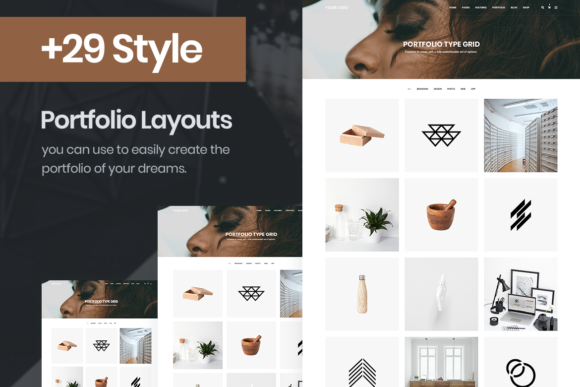
Streamline Your Creative Presentation with Full Portfolio Layouts - PSD Template
In the competitive landscape of creative professions, your portfolio is often the deciding factor between landing a dream client or being overlooked. For designers, photographers, architects, and digital artists, the pressure to present work that is not only high-quality but also visually compelling is immense. However, the process of designing a portfolio from scratch can be time-consuming, technically demanding, and often distracting from the primary goal: showcasing your actual work. This is where a structured, professional solution becomes invaluable. The Full Portfolio Layouts - PSD Template offers a strategic shortcut for creatives who need to present their best work without getting bogged down in the intricacies of layout design.
This comprehensive template is designed to bridge the gap between raw creative output and polished presentation. By providing a pre-structured framework, it allows professionals to focus on curation and storytelling rather than grid systems and typography pairing. Whether you are a freelancer updating your personal brand or an agency preparing a pitch deck, understanding how to leverage this tool can significantly enhance your workflow and final output.
The Challenge of Portfolio Creation
Creating a portfolio involves more than just dumping images into a document. It requires a keen eye for hierarchy, balance, and narrative flow. Many creatives struggle with "blank canvas syndrome," where the freedom to design anything leads to decision paralysis. Common challenges include:
- Inconsistent Branding: Without a predefined style guide, portfolios often suffer from mismatched fonts, colors, and spacing, which can make the presenter appear unprofessional.
- Time Constraints: Designing a unique layout for every project update is inefficient. Professionals need a system that allows for quick updates while maintaining a cohesive look.
- Technical Barriers: Not every creative is a master of layout software. Photographers may excel at lighting but struggle with InDesign or Illustrator, while web designers might find print layouts challenging.
- Mobile and Digital Compatibility: In today’s digital-first world, portfolios must look good on various screens. Ensuring responsive design principles are applied manually is complex and error-prone.
These hurdles often result in delayed submissions, generic presentations, or portfolios that fail to highlight the strength of the work itself. The goal is to remove friction from the presentation process, allowing the quality of your projects to speak for themselves.
How Full Portfolio Layouts - PSD Template Provides a Solution
The Full Portfolio Layouts - PSD Template addresses these pain points by offering a ready-to-use foundation that is both flexible and robust. At its core, this template is built for usability. It is well-organized, with all elements separated into clearly named layers. This organizational structure is critical for efficiency. When you open the file, you are not greeted by a chaotic mess of unnamed groups; instead, you find a logical hierarchy that makes navigation intuitive.
One of the standout features is its editability. The template is fully editable, meaning you are not locked into a rigid structure. You can easily modify texts, swap out fonts, adjust color schemes to match your personal brand, and move or remove elements as needed. This level of customization ensures that while you save time on the initial setup, the final product still feels unique and tailored to your specific identity.
Furthermore, the template is delivered in high quality at 72 dpi, which is the standard resolution for digital viewing. This ensures that your images remain crisp and clear on screens without resulting in unnecessarily large file sizes that are difficult to email or upload. While the primary format mentioned is Adobe XD, the principles of layer organization and ease of use translate seamlessly across design platforms, making it accessible for users familiar with modern UI/UX design tools.
Practical Applications and User Scenarios
Different professionals will approach the Full Portfolio Layouts - PSD Template in varied ways, depending on their specific needs and industry standards. Here is how different users can maximize the value of this resource:
For Graphic Designers and Illustrators
Visual consistency is paramount for graphic designers. Using this template, you can create a cohesive narrative that ties together disparate projects. Because the layers are clearly named, you can quickly duplicate pages for new case studies. The ability to easily edit colors means you can adapt the template’s accent colors to complement the dominant hues of your artwork, creating a harmonious visual experience. For example, if your latest project features bold reds, you can tweak the template’s header and footer accents to match, creating a subtle but effective thematic link.
For Photographers
Photographers need layouts that do not compete with their images. The clean, minimalist structure of the Full Portfolio Layouts - PSD Template provides ample white space, allowing photos to breathe. The high-quality 72 dpi resolution ensures that details are preserved when viewed on tablets or desktops. Photographers can utilize the easy-to-move elements to experiment with different grid layouts—switching from a single-column vertical scroll for portrait shots to a masonry grid for event photography—without needing to rebuild the page structure from scratch.
For UX/UI Designers
Since the template is available in Adobe XD format, it is particularly suited for UX/UI designers who need to present digital products. You can insert mockups of apps or websites directly into the designated frames. The interactive nature of XD allows for the creation of clickable prototypes if needed, but even as a static presentation, the organized layers make it simple to update screen designs. The clear naming convention helps in handing off the portfolio to developers or collaborators who may need to understand the structure.
Implementation Tips for Best Results
To get the most out of the Full Portfolio Layouts - PSD Template, consider the following best practices during implementation:
- Curate Ruthlessly: Just because the template has space for many projects does not mean you should fill it. Select your strongest work that aligns with the type of clients or jobs you are seeking. Quality always trumps quantity.
- Maintain Layer Hygiene: As you edit, keep the layer organization intact. If you add new elements, name them clearly. This ensures that future edits remain quick and frustration-free.
- Customize Thoughtfully: While the template is easy to edit, avoid over-customizing to the point of clutter. Stick to two or three fonts and a limited color palette to maintain a professional appearance. Use the template’s built-in styles as a starting point.
- Optimize Images: Even though the template is 72 dpi, ensure your source images are optimized for web use. Compress images where possible to keep the final file size manageable for sharing via email or online platforms.
- Proofread Text Elements: The ease of editing text is a benefit, but it also introduces the risk of typos. Double-check all headings, body copy, and contact information before finalizing your portfolio.
Why Organization Matters in Creative Tools
The emphasis on "well-organized all in layers with clear names" in the Full Portfolio Layouts - PSD Template is not just a technical detail; it is a productivity feature. In professional design workflows, time spent searching for the right layer is time wasted. A well-structured file reduces cognitive load, allowing you to stay in a state of flow. It also makes collaboration easier. If you need to send your portfolio file to a printer, a developer, or a colleague for feedback, they will appreciate the clarity and professionalism of a well-organized document.
Moreover, the fact that the template is "ready to use" means you can bypass the initial setup phase entirely. Instead of spending days configuring margins, setting up master pages, or choosing typefaces, you can start populating your content immediately. This speed is crucial when opportunities arise unexpectedly, such as a last-minute job application or a sudden request for a proposal.
Conclusion
Your portfolio is a living document that evolves with your career. Having a reliable, flexible, and professional foundation is essential for keeping it up to date without sacrificing your creative energy. The Full Portfolio Layouts - PSD Template provides exactly that: a high-quality, easy-to-edit, and logically organized framework that empowers you to present your work in the best possible light. By removing the technical barriers of layout design, it frees you to focus on what truly matters—your creativity and your story. Whether you are a seasoned professional or just starting out, integrating this tool into your workflow can lead to more consistent, impactful, and efficient portfolio presentations.