Integrating Green Ecology Flat UI UX Elements into Modern Design Workflows
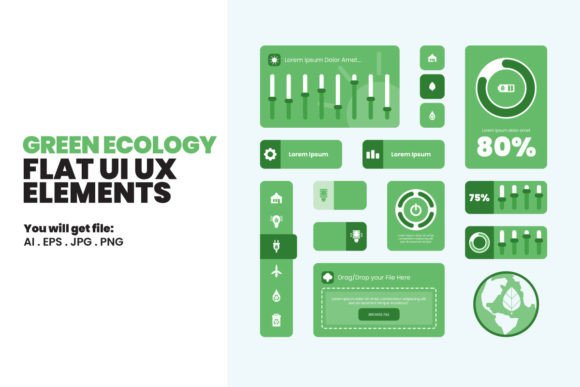
In the rapidly evolving landscape of digital product design, consistency and speed are often competing priorities. Designers, marketers, and entrepreneurs frequently find themselves balancing the need for high-quality visual assets with tight project deadlines. This is where curated asset libraries become indispensable. The Green Ecology Flat UI UX Elements package offers a strategic solution for professionals looking to streamline their interface design process without sacrificing aesthetic integrity. By providing a cohesive set of vector-based components, this resource allows creators to bypass the initial, time-consuming stages of wireframing and basic element creation, enabling them to focus on user experience logic and brand-specific customization.
The Strategic Value of Pre-Built UI Components
Understanding where these elements fit into a broader design workflow is essential for maximizing their utility. Typically, a UI/UX project begins with research and ideation, followed by low-fidelity wireframing. Once the structural layout is approved, designers move into high-fidelity mockups. This is the phase where Green Ecology Flat UI UX Elements adds the most value. Instead of drawing every button, input field, icon, and toggle switch from scratch, designers can import pre-made, scalable vectors that adhere to flat design principles.
Flat design, characterized by minimalism and two-dimensional illustrations, remains a cornerstone of modern web and mobile interfaces due to its clarity and load-time efficiency. The green ecology theme specifically taps into the growing demand for sustainable, organic, and health-oriented visual languages. Whether you are building an app for environmental tracking, a wellness platform, or a corporate site emphasizing corporate social responsibility, these elements provide an immediate visual foundation that aligns with those values.
Technical Compatibility and Workflow Integration
One of the most critical aspects of any digital asset is its compatibility with existing tools. A fragmented workflow, where files must be converted repeatedly between formats, introduces friction and potential quality loss. This package addresses that concern by offering versatile file formats, including AI (Adobe Illustrator), EPS, High-Resolution JPG, and Transparent PNG files.
For professional designers working within the Adobe Creative Cloud ecosystem, the native AI files are the primary asset. These files retain full editability, allowing you to manipulate anchor points, adjust stroke weights, and modify color palettes directly within Illustrator. However, the inclusion of EPS files broadens the accessibility significantly. EPS is a universal vector format that can be opened and edited using Corel Draw, making this package viable for agencies or freelancers who prefer non-Adobe workflows. This cross-platform compatibility ensures that the assets can be integrated regardless of your preferred software stack.
For non-designers, such as content managers, bloggers, or small business owners who may not have advanced vector editing skills, the high-resolution JPG and transparent PNG files offer a "plug-and-play" solution. These raster images can be dropped directly into website builders, presentation software, or social media graphics tools like Canva or PowerPoint. The transparent backgrounds of the PNG files are particularly useful for layering icons over complex backgrounds without unsightly white boxes, maintaining a polished look with minimal effort.
Customization and Brand Alignment
While ready-to-use assets save time, they must not result in generic-looking products. The key to successful implementation lies in customization. The elegant minimal design of these elements serves as a neutral canvas. Because the files are vector-based, scaling them up or down does not result in pixelation, ensuring crisp visuals on everything from mobile screens to large 4K monitors.
To integrate these elements seamlessly into your specific brand identity, consider the following practical steps:
- Color Adaptation: Open the AI or EPS files in your vector editor. Use the global swatch feature if available, or simply select individual elements to change the fill colors. Match the hex codes to your brand’s style guide. The flat design structure makes recoloring straightforward, as there are no complex gradients or shadows to manage.
- Consistency Checks: Ensure that the stroke width and corner radius of the downloaded elements match the rest of your interface. If your design system uses rounded corners with a 4px radius, adjust the UI elements to match. Consistency in these micro-details creates a cohesive user experience.
- Iconography Harmony: If you are mixing these ecology-themed icons with other icon sets, verify that the line weights and stylistic approach (filled vs. outlined) are consistent. Mismatched icon styles can disrupt visual hierarchy and confuse users.
Efficiency in Collaborative Environments
In team settings, standardized assets reduce communication overhead. When multiple designers or developers are working on a project, having a shared library of UI elements ensures that everyone is speaking the same visual language. The Green Ecology Flat UI UX Elements can serve as a starting point for a internal design system. By organizing the AI layers logically—grouping buttons, forms, and navigation elements separately—teams can quickly locate and reuse components.
Furthermore, the ease of editing facilitates rapid prototyping. During stakeholder meetings, being able to swap out icons or adjust layouts in real-time demonstrates responsiveness and professionalism. The vector nature of the files means that changes made during a brainstorming session can be immediately reflected in high-fidelity mocks, accelerating the decision-making process.
Quality Control and Resolution Management
Maintaining high visual standards is non-negotiable in professional design. The inclusion of high-resolution JPGs and transparent PNGs ensures that even when vector editing is not an option, the output remains sharp. For web use, it is advisable to export PNGs at 2x or 3x resolution to accommodate retina displays, then scale them down via CSS. This technique preserves clarity while keeping file sizes manageable for faster page loads.
When using the vector files, always check for stray anchor points or open paths before exporting. Although these elements are described as ready to use, a quick quality control pass ensures that no technical glitches interfere with development handoff. Clean vectors translate to cleaner code when developers slice assets for implementation.
Licensing and Ethical Usage
It is crucial to understand the terms associated with digital assets to protect your business and respect intellectual property rights. This product is a DIGITAL download, meaning no physical items will be shipped. Upon purchase, you receive immediate access to the files, allowing you to begin work instantly.
However, the license comes with strict limitations. The ACTUAL FILES may NOT be shared or resold in any form. This means you cannot upload the AI or EPS files to a stock site, share them with clients as standalone deliverables, or include them in a template kit you sell. You are licensed to use the elements within your own projects—whether those are client websites, mobile apps, or marketing materials. The value lies in the application of these elements to create something new, not in the redistribution of the raw assets themselves. Adhering to these guidelines ensures a sustainable ecosystem for creators and protects you from legal complications.
Long-Term Utility and Scalability
Beyond immediate project needs, investing in high-quality UI kits pays dividends over time. As your portfolio grows, having a repository of well-organized, editable assets reduces the startup time for future projects. The Green Ecology Flat UI UX Elements are not just for one-off tasks; they are building blocks for a scalable design practice. Whether you are an educator creating course materials, a freelancer pitching a new client, or an entrepreneur launching a startup, these tools provide a professional edge.
By integrating these elements into your routine, you shift focus from repetitive drafting to strategic design thinking. You spend less time drawing rectangles and more time considering user flows, accessibility, and conversion optimization. This shift in focus is what separates amateur designs from professional-grade digital products.
In conclusion, the Green Ecology Flat UI UX Elements represent a practical, efficient, and versatile resource for modern digital creators. By leveraging the compatibility of AI, EPS, JPG, and PNG formats, you can adapt these assets to fit any workflow, toolset, or skill level. When used correctly—with attention to customization, consistency, and licensing—they enhance both the speed and quality of your design output, allowing you to deliver elegant, minimal, and impactful user experiences.